
If a garage door ever reverses sluggishly, sticks partway, or closes without pausing when something is underneath it, stop using it until it's fixed. The exceptions are doors that are brand new (sensors can be misaligned during install), doors that were just serviced (settling parts can briefly behave oddly for a day), and manual pedestrian doors with no opener, which don't have auto-reverse at all and need a different safety approach entirely.
What Actually Goes Wrong
Garage door injuries to kids and pets follow a short list of patterns, and they're almost always preventable:
- Entrapment under a closing door. A child darts under a moving door, or a dog chasing a ball doesn't register the door is coming down. If the auto-reverse sensors are misaligned or dirty, the door doesn't stop.
- Finger and paw pinch points. The horizontal seams between panels close like a hinge as the door moves. Small fingers and paws fit exactly where adult hands don't.
- Remote access by curious kids. A garage remote left in a golf cart, on a low shelf, or clipped to a visor at kid height turns the door into a toy. Doors have come down on pets and property because a child pressed a button without understanding what it does.
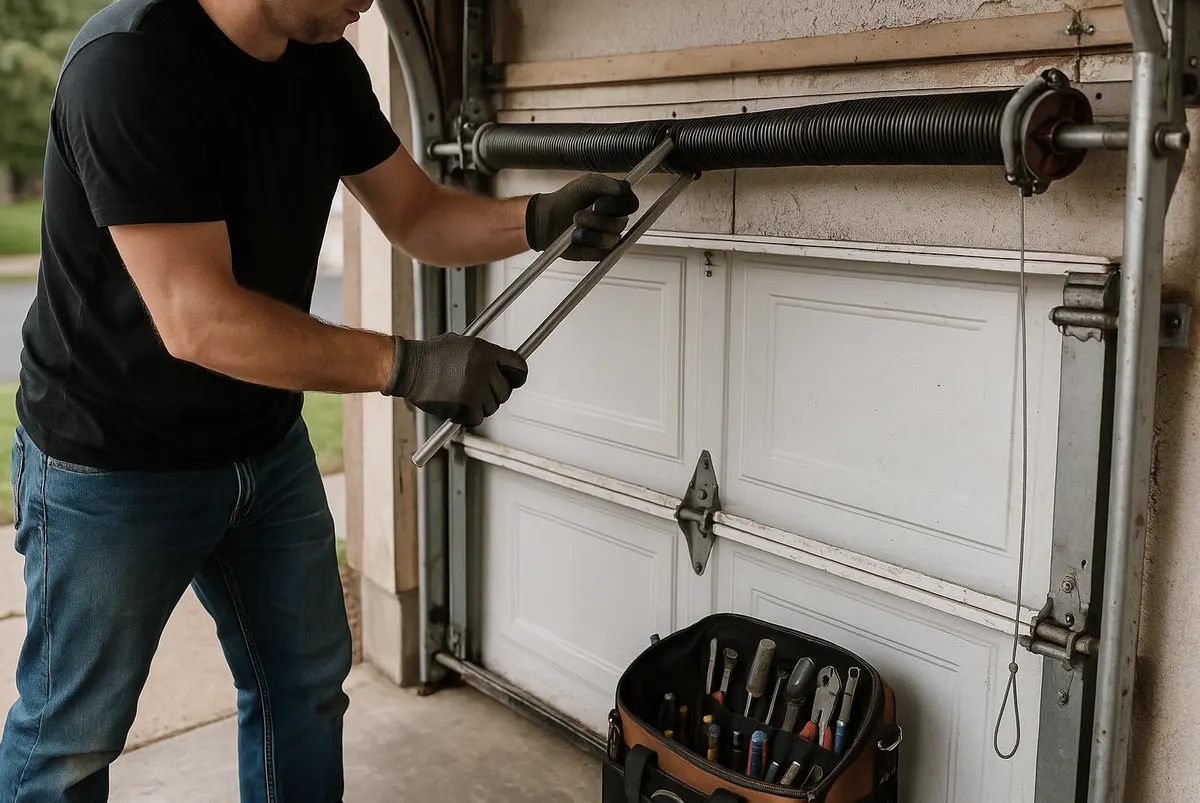
- Spring failure during play near the door. Torsion springs store enormous tension. A corroded or worn spring that snaps while someone is standing nearby can send cable and hardware flying.
- Panel strikes from an off-track or unbalanced door. A door that's come off its track can drop unevenly or swing when disturbed, which is especially risky if a pet is leaning against it or a kid is climbing on the bottom panel.
Why Pinellas County Weather Adds Risk
Humidity and salt air don't just shorten the life of hardware, they change how a door behaves day to day. Wood and composite panels swell in humid stretches and can bind slightly in the track, so the opener has to work harder to pull the door closed. If the force settings on the opener were never adjusted for that extra resistance, the door can slam the last few inches instead of easing down, which defeats the point of a slow, reversible close. Salt air corrodes the photo-eye sensor brackets and the metal contacts inside, so a sensor that worked fine in spring can be unreliable by late summer. And after a tropical storm or hurricane, power outages mean families switch to manual operation more often; a door lifted and dropped by hand has no auto-reverse protection at all, which is exactly when a pet underfoot is most likely to get hurt.
The Sensor Check Every Household Should Do Monthly
Most openers installed since the early 1990s have two photo-eye sensors a few inches off the floor, one on each side of the track. Here's the real test, not just a glance:
- Close the door and place a roll of paper towels or a similar object in its path.
- Trigger the door to close. It should reverse immediately on contact.
- Separately, wave a broom handle through the invisible beam between the two sensors while the door is closing. It should stop and reverse before touching anything.
- Wipe both sensor lenses with a dry cloth. Salt film and humidity haze build up and can weaken the beam without fully blocking it, which is worse than an obvious failure because it works intermittently.
If the door doesn't reverse in either test, stop using the opener until the sensors are realigned or replaced. This isn't a wait-and-see item.
Pinch Points and Pet-Height Hazards
Walk the door slowly through one full cycle and watch the panel seams at the height your pet or youngest child stands. Pinch-resistant panel designs exist specifically to close that gap, and if your door predates that design, a simple fix is adding finger-pinch guards along the seams, sold as inexpensive plastic inserts. Also check that the bottom weather seal isn't torn or pulling loose, since a torn seal is often the first sign a pet has been pawing or chewing at the door, usually because the door's movement startles them.
Remote and Keypad Safety Habits
Treat garage remotes like car keys, not like a TV clicker. Keep handheld remotes off low shelves and out of cup holders kids can reach. Set keypad codes that aren't the house address or a kid's birthday, and teach any child old enough to use the keypad that the door is not for play, the same conversation you'd have about a pool gate. If your opener has a vacation lock or smart-lock feature in its app, use it during long stretches when kids are home with less supervision, such as school breaks.
When to Call Tarpon Springs Garage Door Experts
If sensors won't hold alignment, a panel seam is pinching, or the door is slow, jerky, or uneven when it moves, that's beyond a quick home fix and worth a technician visit. We handle Garage Door Maintenance & Tune-Up visits that include sensor alignment, force adjustment, spring tension checks, and lubrication suited to Gulf Coast humidity, so the door behaves consistently instead of randomly. If the door is actually off its track, sagging, or showing spring damage, our Off Track Door Repair and spring repair services get it back to safe, predictable operation rather than masking the symptom.
If you have kids or pets in the house and it's been a while since anyone tested the safety reversal, don't wait for an incident to find out it's not working. Call Tarpon Springs Garage Door Experts and we'll check it properly, serving Tarpon Springs, Palm Harbor, Dunedin, Holiday, New Port Richey, Clearwater, Oldsmar, and Trinity.